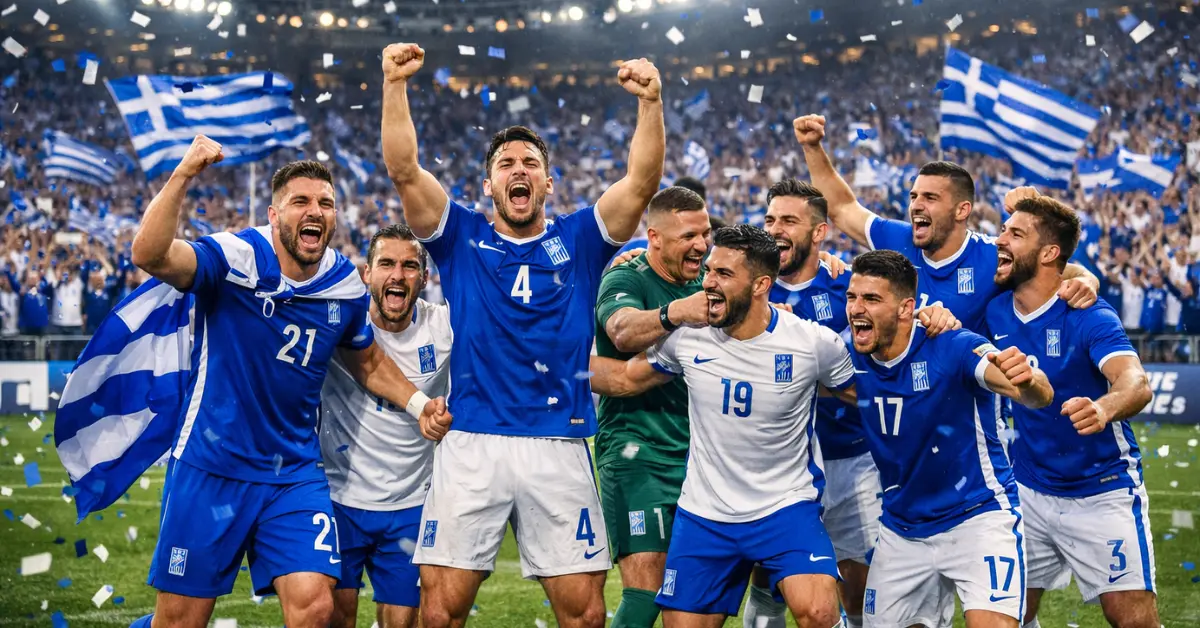
The Greece National Football Team, also known as Ethniki Omada, is one of Europe’s most fascinating football stories. From underdog status to shocking champions of Euro 2004, Greece has built a reputation for discipline, resilience, and tactical intelligence.
This guide covers everything you need to know—history, achievements, squad, tactics, rankings, and what lies ahead.
Quick Facts About Greece National Football Team
- Nickname: Ethniki (The National Team)
- Governing Body: Hellenic Football Federation (HFF)
- Confederation: UEFA (Europe)
- Home Stadium: Olympic Stadium, Athens
- FIFA Code: GRE
- Major Achievement: UEFA Euro 2004 Champions
A Brief History of the Greece National Football Team
Early Years (1929–1990s)
Greece played its first international match in 1929. For decades, the team struggled to compete with Europe’s elite.
- Rare tournament qualifications
- Limited international recognition
- Focus on domestic football development
Breakthrough Moment: UEFA Euro 2004
The defining moment in Greek football history came in Euro 2004, when Greece stunned the world.
Key highlights:
- Defeated host nation Portugal in the opening match
- Eliminated France (defending champions)
- Beat Czech Republic in the semi-final
- Won the final against Portugal (1–0)
Why this mattered:
- Greece became one of the biggest underdog champions ever
- The victory reshaped global perceptions of the team
- Tactical discipline became their identity
Major Achievements
International Honors
UEFA European Championship:
- Winners: 2004
FIFA World Cup Appearances
- 1994
- 2010
- 2014 (Reached Round of 16)
Playing Style and Tactical Identity
Unlike flair-heavy teams, Greece is known for its defensive organization and teamwork.
Core Tactical Traits:
- Strong defensive structure
- Compact formation (often 4-3-3 or 5-4-1)
- Set-piece efficiency
- Counter-attacking football
What Makes Greece Unique
Most competitors only mention “defensive play,” but here’s what’s often missed:
- Mental discipline: Players strictly follow tactical roles
- Game management: Greece excels at controlling tempo
- Adaptability: The team adjusts strategy based on opponents
Current Squad Overview
The modern Greece squad blends youth and experience.
Key Players (Recent Years)
- Kostas Tsimikas – Liverpool left-back, strong crossing ability
- Giorgos Masouras – Versatile attacking midfielder
- Anastasios Bakasetas – Captain and creative playmaker
- Odysseas Vlachodimos – Reliable goalkeeper
Emerging Talents
- Young players are now joining top European leagues
- Increased technical skill compared to previous generations
Greece National Team Rankings
FIFA Ranking Trends
- Peak years: Post-2004 success
- Recent years: Mid-tier European ranking
What Affects Their Ranking?
- Qualification performance
- UEFA Nations League results
- Consistency against stronger teams
Home Stadium and Fan Culture
Olympic Stadium (Athens)
- Capacity: Over 69,000
- Iconic venue for national matches
Fan Support
- Passionate and loyal supporters
- Strong atmosphere during qualifiers
- National pride deeply tied to football success
Strengths and Weaknesses
Strengths
- Tactical discipline
- Defensive organization
- Strong teamwork
- Effective in knockout competitions
Weaknesses
- Lack of consistent goal scorers
- Limited attacking creativity
- Struggles against high-pressing teams
How Greece Compares to Other European Teams
Most competitor articles skip direct comparisons—here’s a quick one:
| Category | Greece | Top European Teams |
|---|---|---|
| Defense | Very strong | Strong |
| Attack | Moderate | High |
| Depth | Limited | Extensive |
| Tactics | Highly structured | Flexible |
Insight: Greece often outperforms expectations despite having fewer star players.
Road to the Future
The Greece National Football Team is rebuilding with a long-term vision.
Key Developments
- Investment in youth academies
- Players gaining experience in top leagues
- Improved attacking strategies
Future Expectations
- Stronger qualification campaigns
- Potential return to major tournaments
- More balanced style of play
Why Greece Still Matters in World Football
Even years after Euro 2004, Greece remains relevant because:
- It proved that teamwork can beat talent
- It set a blueprint for underdog success
- It continues to evolve with modern football trends
Final Thoughts
The Greece National Football Team is more than just a past champion. It represents discipline, resilience, and the power of strategy in football.
While not always the most glamorous team, Greece consistently shows that smart tactics and unity can compete with the world’s best.